
The Painting Friars
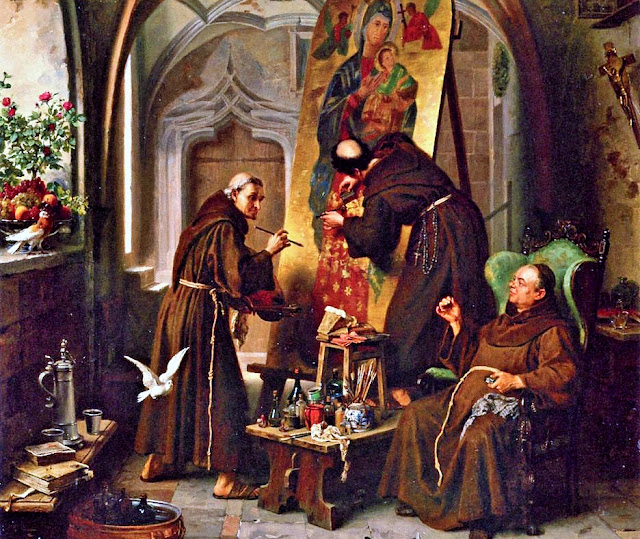
The Painting Friars – Albert Conrad, c. 1880–1910
This charming genre painting by Albert Conrad presents a warm and intimate glimpse into daily life within a Franciscan community. Conrad, active during the late 19th and early 20th centuries, is known for his refined depictions of monastic interiors and tender portrayals of friars engaged in simple acts of labor, study, or companionship. Working in the tradition of the Munich and Viennese academic schools, his paintings often highlight the quiet joy and gentle humor found in communal religious life.
In this scene, three Franciscan friars gather in a cloistered passageway, partially open to the outdoors. Two of the friars are carefully engaged in finishing a large devotional painting of the Blessed Virgin Mary holding the Christ Child, likely in her advocation as Our Lady of Perpetual Help. The Virgin stands robed in vivid royal blue before a radiant gold background, suggesting that this image is destined for a niche or chapel altar. The top of the painting curves into a rounded dome shape, further reinforcing its liturgical purpose.
The third friar, however, is not painting. Seated at ease on a wooden chair, he joyfully feeds a group of small birds, animating the scene with warmth and gentle humor. His companions appear to be listening to him as they work, suggesting a moment of storytelling or shared reflection. The environment around them is filled with evidence of their artistic labor and daily life: jars of pigment, brushes, stacked canvases, and on a nearby bench, a neatly arranged tea service accompanied by cheese and bottles of wine resting in a cooling pot below. Overhead, a window ledge holds a basket overflowing with fruit, a symbol of abundance and hospitality.
The architecture of the cloister adds a graceful backdrop, with arched passageways adorned in a style reminiscent of Eastern or Moorish influence, lending the composition a refined and contemplative atmosphere. The palette is warm and welcoming, enhancing the sense of peace and camaraderie. Conrad’s painting celebrates simplicity, shared vocation, and the small joys of brotherhood. It is a tender reminder that devotion is not only found in the sacred object but also in the everyday, lived together in community.
“An artist who paints our Lord or the Blessed Virgin honors them and recalls them to our mind. Nevertheless, the painting claims no other merit than what it is, a creation of wood and color. God's servant is like a painting, a creature of God through whom God is honored because of His blessings. A servant must not lay claim to any more merit than wood and color do. Honor and glory must be given to God alone.” - St. Francis ( Legend of Perugia)


Comments
Post a Comment