
TAU Seraphic Inspiration
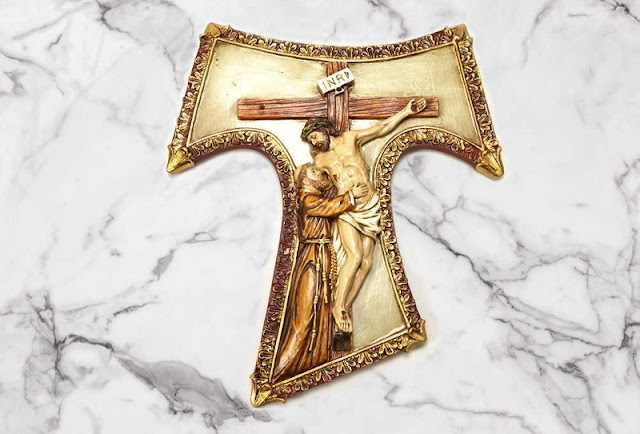
On November 11, 1215, Saint Francis of Assisi attended the Fourth Lateran Council in Rome. As Minister General of his Order, he was there not for honor, but to represent the friars and their mission of living the Gospel in radical simplicity.
It was during this council that Pope Innocent III spoke of the Tau, the last letter of the Hebrew alphabet, shaped like a cross. He said:
“Tau is the sign that is worn on the forehead when the splendour of the Cross manifests itself in us.”
Francis was captivated. From that day on, the Tau became his personal symbol. He painted it on the walls of friary cells, signed it on letters, and carried it as a sign of penance, humility, and devotion. Over time, all branches of the Franciscan family would adopt it as a mark of identity.
Being Minister General, Francis’s role was to guide the Order, ensure its adherence to the Rule, and care for the friars. The Lateran Council was a major Church assembly, shaping doctrine and reform, and his presence connected the fledgling Order to the wider life of the Church. The Tau reminded Francis — and his brothers — of their central calling: to follow the Cross in all aspects of life, in humility and service.
Even today, the Tau remains a symbol of Franciscan life: worn as a pendant, drawn on walls, or simply remembered as the sign that inspired a saint.


Comments
Post a Comment