
Saint Francis by Bernardo Strozzi
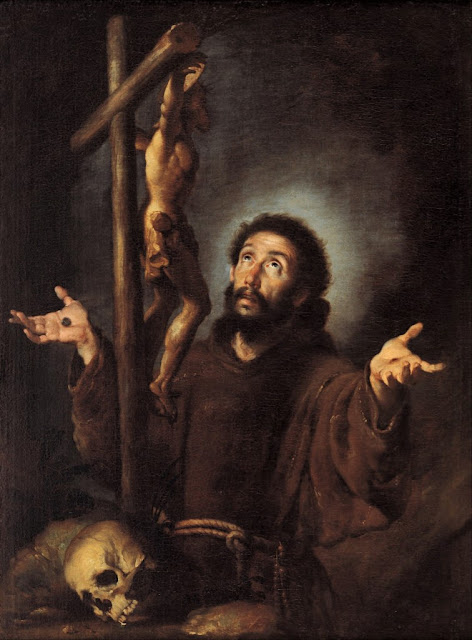
Bernardo Strozzi, known as il Cappuccino (1581–1644), was a central figure of the Italian Baroque, working first in Genoa and later in Venice. Originally a Capuchin friar, Strozzi developed a powerful painterly style characterized by vivid, glowing color and broad, expressive brushwork. His connection to the Capuchin Order deeply shaped his artistic production, inspiring numerous depictions of Saint Francis of Assisi whose life served as a primary spiritual model for the order. Strozzi created works in both fresco and canvas, ranging from history and allegorical scenes to portraits and still lifes, and his influence helped define early Venetian Baroque visual language. Continue reading after advertisement
Get a set of 3 restored images (including the one featured in this post) now on sale

Get a set of 3 restored images (including the one featured in this post) now on sale

The saint’s brown Capuchin habit appears worn and roughly textured, tied at the waist with a simple rope, emphasizing his embrace of poverty and humility. At the base of the crucifix rests a human skull, a traditional memento mori, inviting contemplation of mortality and salvation. The skull and crucifix sit atop a large rock, which rises to the height of Francis’s waist, supported by smaller stones beneath. The composition draws the viewer’s gaze upward from earthly death, through the saint’s suffering, to the redemptive sacrifice of Christ. The artwork is currently held in the Art Gallery of South Australia (oil on canvas, 124.0 × 92.5 cm).
Get a set of 3 restored images (including the one featured in this post) now on sale

Study for St Francis of Assisi adoring the cross (1615), black & white chalks on oatmeal paper


Comments
Post a Comment