
Nativity with St Francis and St Lawrence Caravaggio 1609
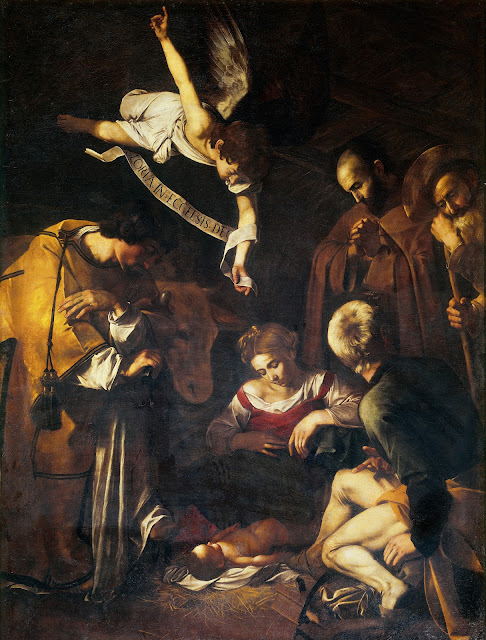
Nativity with Saint Francis and Saint Lawrence was originally exhibited in the oratory of Saint Lawrence, in Palermo, Italy. The painting represents a scene of the nativity of Jesus, made by the Italian painter Caravaggio, a master famously known for his dramatic use of chiaroscuro—the bold contrast of light and shadow that heightens emotional intensity. Caravaggio’s influence on this technique became so iconic that it shaped Baroque painting throughout Europe.
It has been missing since 1969 when it was stolen from the oratory, and from then on, its whereabouts are unknown. Investigators believe the painting changed hands among the Sicilian Mafia in the decades following the robbery and may still be hidden. A replica was commissioned in 2015 and that's the one hanging in the altar.
This was completed by Italian painter Caravaggio in Rome in 1609 before he moved to Palermo. It was believed to have been painted in Sicily, one year before he died. It depicts the nativity of Jesus, with saints Francis of Assisi and Lawrence among other figures surrounding Mary and the newborn Jesus. The painting is about 2.7 meters high and two meters wide.
On the night of October 17–18, 1969, two thieves stole the painting from its home in the Oratory of Saint Lawrence in Palermo. They cut the painting from its frame, and also took a carpet which authorities believe was used to roll up the painting.
The scene does not represent a happy Nativity, like the traditional works of Caravaggio, behind each character there is a dark halo of fear. This effect is intensified by Caravaggio’s chiaroscuro: the figures emerge out of deep, heavy darkness, their faces illuminated only partly, like thoughts flickering between hope and despair.
We can appreciate how the Holy Family is accompanied by a melancholic Saint Lawrence and Saint Francis. The Virgin herself appears strikingly young, yet her expression is somber and reflective, as though already aware of the suffering that awaits her Son. Even the ox looks at the newborn with disbelief and concern. And the angel that descends from heaven looks like it's going to crash down on top of the child. This angel, however, is the one figure that carries a sense of lightness and joy, holding a banner that reads Gloria in excelsis Deo, echoing the proclamation of the heavenly host—though here, even that joy feels fragile, suspended in uncertainty.
It is possible that Caravaggio wanted to capture his own lack of faith in his religious works.
The Nativity with Saint Francis and Saint Lawrence was originally exhibited in the Oratory of San Lorenzo, in Palermo, Italy, but in 1969 it was robbed, which means its whereabouts are unknown.

The scene does not represent a happy Nativity, like the traditional works of Caravaggio, behind each character there is a dark halo of fear.
We can appreciate how the Holy Family is accompanied by a melancholic Saint Lawrence and Saint Francis. Even the ox looks at the newborn with disbelief and concern. And the angel that descends from heaven looks like it's going to crash down on top of the child.
It is possible that Caravaggio wanted to capture his own lack of faith in his religious works.


Comments
Post a Comment